Piranha Options Trading
TURNING SMALL BITES INTO LARGE PROFITS
Danger Ahead!
Before following any of my trades or anyone else’s, understand the Risk.
When selling a cash covered PUT I understand that I am agreeing to purchase the stock at the strike price, REGARDLESS of how LOW it goes beyond that strike price. For example, if I sell a $10 put on a stock while it is trading at $12, and the stock price plummets to $1, I am obligated to buy it for $10 even though the current price is $1.
When selling a stock covered CALL I understand that I am agreeing to sell that stock at the strike price REGARDLESS of how much higher the price moves above that strike. For example, if I sell a $10 call on a stock trading at $4 ,and overnight the price jumps to $20, I am obligated to sell it for $10 even though it is now much higher.
Please do your due diligence before making any kind of trade in the market, and fully understand the risk associated with the trade.
May you find Peace in this world. John 14:27
The Stock Market seems to be cooling off and your Position is taking on water.

What’s a practical way to bail instead of bailing out.
The market has been red hot….but what if tomorrow it’s not?
Every time I purchase stock, I expect that it will go up. However, it doesn’t always go as expected. Sometimes it stays flat or even worse, it takes a dump. If the stock price really starts dropping, bailing out may seem to be the obvious choice. However, it might surprise you that staying put and “bailing water” may be the best solution.
First of all, let’s work through the details. Say you purchased XYZ corp stock. 1000 shares at $5 each for a total investment of $5000. At the end of three months the stock had dropped to $3.45 per share and now worth $3450. To bail out and sell, would be a net loss of $1550.
How to stay in the boat and possibly prosper.
When you purchase stock you have purchased an asset. An asset is something that makes money. A classic car would be an example of an asset that could make money but often is just kept locked up, with dreams of selling it one day for a fortune. That’s perfectly ok. But what if there was a way to get paid every month you own the asset. What if you could get paid every month and never sell….if that’s appealing then you might consider “selling” call options
Buy and hold VS Buy and “ Sell others the Option to Buy”
Selling the “Option to buy” is like dangling a carrot in front of the horse to get him to move. Just before he gets the carrot you move it just out of reach and he tries again and again and again. This is how a well placed call option can work for you.
Once you own stock, you can sell a call option against it. This is simply offering the stock for sale at a set price and for a set period of time. For example let’s say you own xyz stock that you purchased for $5. It’s currently trading for $4 and you believe that it will eventually go up above $5. Since you paid $5 you really don’t want to lose money on the trade so you might want to sell it for $6 at a minimum so that you still make some profit.
Month one:
So let’s say you offer the stock for sale at $6 using a call option. The $6 call option is selling for .45 cents per share with 30day expiration. So you will receive a payment of 45 cents per share when someone agrees to “try and buy” your shares for $6. This means that during the next 30 days you agree to sell the stock for $6 “only if” the price goes above $6 during the 30 day period. Since you received .45 cents per share up front , you would actually be selling for 6.45 if the stock price gets to $6. Now here is the jewel, you still have the option to back out. Just like the analogy with the carrot and horse….yep! You have the option to move the carrot! Options, give you options!
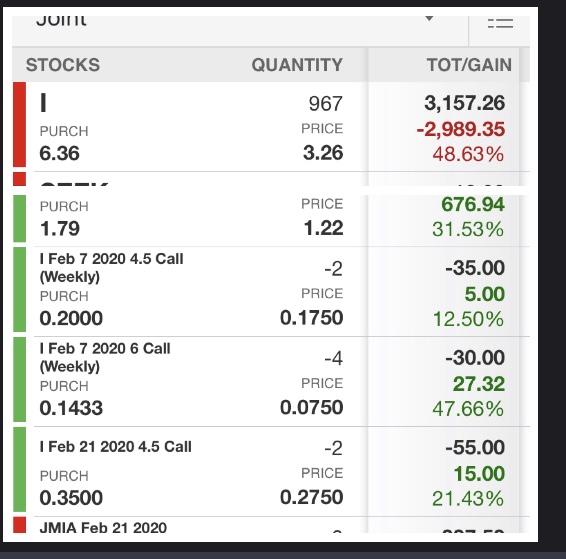
Ok, worst case first!
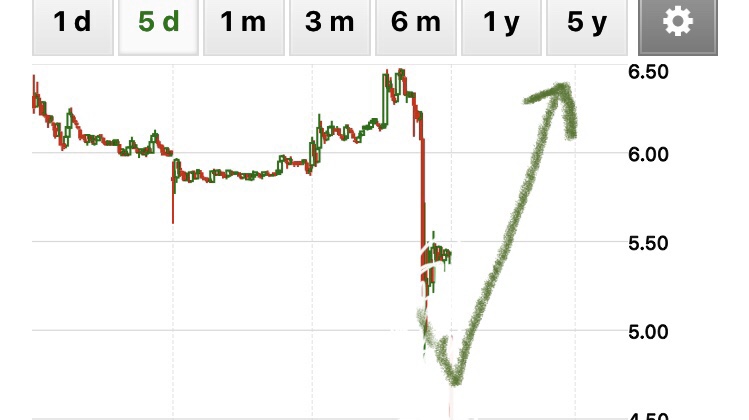
Let’s say the stock price begins to rise and is getting close to your $6 price. Then it would seem you sold to cheap. Yes, that could happen,
However, by using the call option, you now have options. One option is let the deal play out. You collect 1.45 x1000 shares. 1450 on 5000 investment 29% return on capital. Secondly, you have the option to close the deal early and not sell the stock. Just simply buy back the contract for a fee and keep the stock. Lastly, You can also Roll the option contract out further in time and increase the sale price at the same time.
How to Roll an option
As an example let’s say you purchased the stock for $5 then immediately sold a $6 call that paid a 45 cent premium. During the next 30 days the stock price went up and is close to passing the $6 strike. The $6 option could be rolled out and up.
Let’s assume it was trading at $5.90 and set to expire in 7 days. You decide to roll the position to keep from selling the stock to cheap. So first buy to close the $6 option at a cost of .35 x 1000 shares = cost of $-350. Then open the $7 call that expires in 30 days. The $7 call premium is now up to .70 so you sell it for .70 x 1000 = $750 subtract the closing cost -$350 equals net credit of $400. You now have successfully moved the carrot and received $400 in premium. The best part is that since you still own the stock, you can continue to move the carrot every month as the stock price moves up or down.
What if the stock continues to fall?

So what if the price continues drop and doesn’t get to $6 contract price? This is the best part….You get paid!
Since the agreement becomes void at expiration if the price closes below the $6 strike price. It is considered “out of the money” and worthless. In our example you received 45 cents per share in premium for making the offer. The 1000 shares @.45 is $450. At expiration the broker releases your shares back to you and you keep the $450 premium And that is to not sell your stock! Not to bad 30 day return on a 5000 investment.
What if the premiums are too low!
This will happen. As the stock price drops so will the call premiums. So you can wait for the market to rebound or sell calls closer to the trading price out with 30-45 days before expiration. Premiums are typically higher the further out you go in time. And also giving the stock more time to rise.
Let’s assume the trading price is $3 and that’s $2 less than you paid. There’s no way you want to sell it that cheap. So again we use call options 30-45 days out. Selling a $4 call 45 days out might be selling for .25 cents. If you sell that option collect 250 on 1000 shares. As the price rises you can roll the option up and out. If the price keeps dropping let it expire and keep the $250 premium. And prepare to sell another out of the money call on the following month.
The premium and stock price will vary during the month, sometimes higher or lower, depending on the volatility of the stock. Nevertheless, this simple strategy can be useful in keeping a weak position afloat. This can also be repeated every month as long as you own the shares, creating an income from the asset.
As always, may the Lord Jesus make you to prosper, in all you do.
Psalm1:3
Happy trading!
Is my Position Failed or Favored
I recently made an option trade that looked favorable at the time. However, in the last week the stock price has taken a dive and I have to decide which way to go. Do I hold the option and complete the sale, do I roll the option for another week, or just simply buy it out and take the loss?

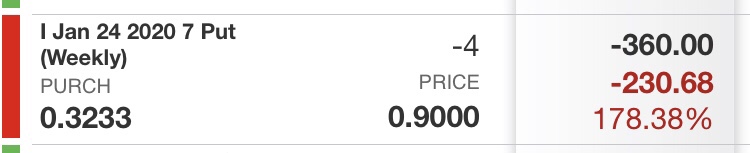
Option 1 – Just hang on
If I hold through expiration I will own 400 shares at 7.00, and since I strongly believe it will rebound, then that’s ok. Secondly, I can then begin selling calls against the 400 shares creating weekly income. Looking at next week, a $7 call is paying .25/share. This would create $100 income for the following week. That’s 3.5% ROC return in capital in 14 days. Then as the stock price moves up, I move the call strike to continue collecting premium. Looks good so far.
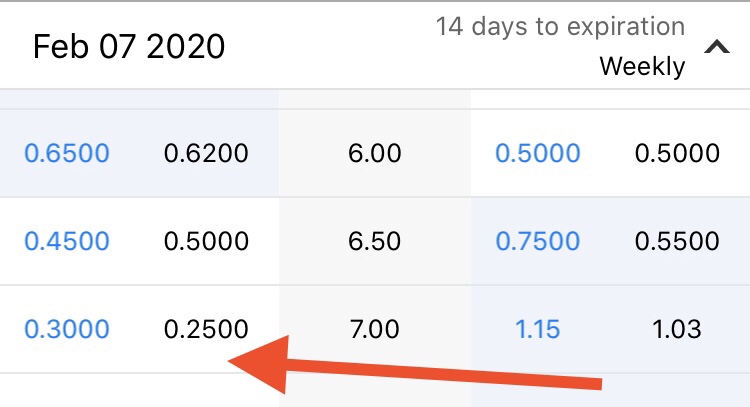
Option 2 – Roll option to next week

Not even 1/10 of 1%
Option 3 – Buy to close

Net loss of $292.00
After reviewing my options I’m sticking with option 1, it’s the only one that offers any kind of profit
Oklahoma Sooner sports page. Scoops, photos, and updates for all things Sooner sports, plus plenty of recruiting content. Visit our website at http://theboomerbeat.com

StockTwits is a social media platform designed for sharing ideas between investors, traders, and entrepreneurs.

 Piranha Options Trading
You must be logged in to post a comment.